
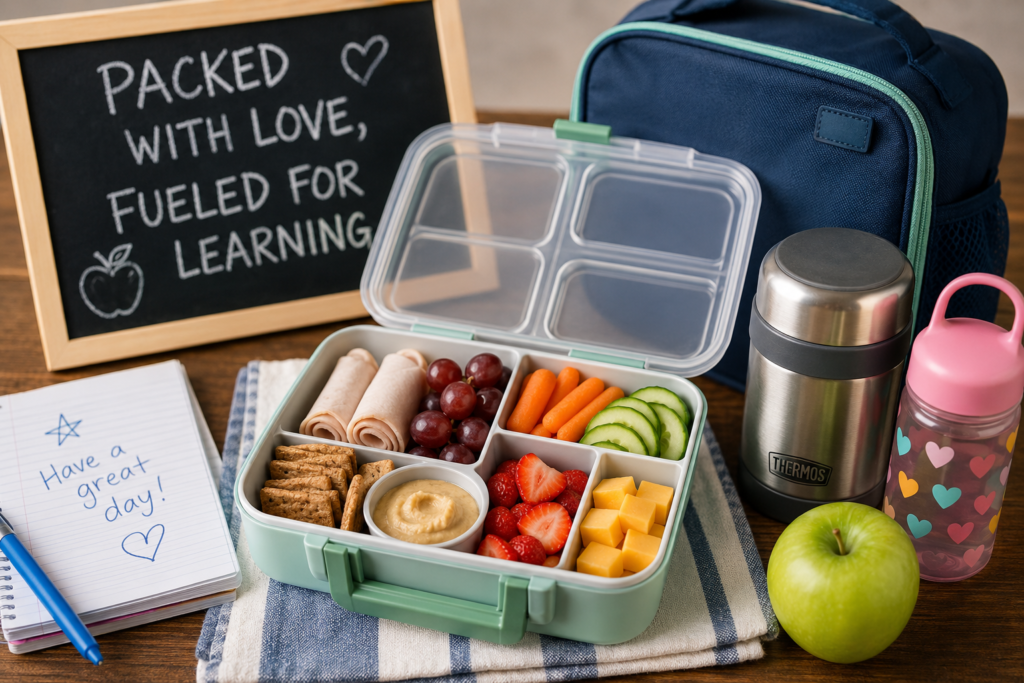
Packing a school lunch every single weekday sounds simple until you’re staring into the fridge at 6:45am with nothing but half a cucumber and a strong sense of dread. Between avoiding the cafeteria line, working around allergies, and just wanting your kid to eat something nutritious before 3pm, lunch packing is one of those small daily tasks that quietly eats up a lot of mental energy.
Here’s a practical, no-guesswork approach to make it easier — covering how to build a balanced lunch, how to actually keep hot food hot, what bento boxes are good for, and a big list of ideas by category so you’re never starting from a blank fridge.
Start With the Building-Block Method
Instead of trying to invent a whole “meal,” think of a school lunch as five small building blocks. Pick one from each category, and you’ve got a balanced lunch without any real planning:
- A protein : something with staying power that keeps them full past 1pm
- A whole grain or starch : the energy base
- A fruit : natural sweetness, fiber, hydration
- A vegetable : raw and crunchy tends to travel best
- A healthy fat or “extra” : this is what makes the lunch actually satisfying, not just balanced on paper
Once this becomes a mental checklist, packing lunch turns into a five-second decision instead of a creative project every morning.
How to Actually Keep Food Hot Until Lunchtime
A good insulated food jar (often just called a thermos, even though Thermos is technically a brand name) can keep food genuinely hot for 4-5 hours, but only if you use it correctly. The single biggest mistake parents make is skipping the preheat step.
The preheat trick: Before adding your kid’s food, fill the empty thermos with boiling water and let it sit, sealed, for 5 minutes. Dump the water out right before adding the actual food. This warms up the container itself so it’s not pulling heat out of your food for the first 20 minutes. Skipping this step is the difference between “still steaming at noon” and “lukewarm by 10am.”
Foods that hold up well in a thermos:
- Mac and cheese
- Chicken and rice, or chicken noodle soup
- Meatballs with marinara
- Chili
- Mashed potatoes with a little gravy
- Plain pasta with butter or olive oil (sauces with dairy can separate a bit but still tastes fine, just looks less pretty)
- Oatmeal (great for an early morning practice or an easy backup lunch)
Pack the thermos as the very last thing before you leave the house, right after the preheat step, to lose as little heat as possible before it goes in the lunch bag.
Keeping Cold Food Actually Cold (and Safe)
For anything that isn’t going in a thermos, food safety matters more than people usually think about. The general rule: perishable food shouldn’t sit at room temperature for more than 2 hours, and it’s often sitting in a backpack for close to that long by lunchtime.
- Use two ice packs, not one. One on top of the food, one underneath. A single ice pack often isn’t enough to keep an insulated bag cold through a full morning.
- A frozen juice box or frozen water bottle can double as an extra ice pack that’s thawed out and drinkable by lunch.
- Insulated lunch bags matter more than people think. A basic $10 zip-top insulated bag genuinely performs better than a “cute” bag with thin fabric and no real insulation.
Why Bento Boxes Are Worth the Hype (Especially for Picky Eaters)
If you’ve got a picky eater, a bento-style box with multiple small compartments tends to work better than a single big lunch. There’s something about small, separate portions that makes food feel more approachable, nothing is “touching,” everything is bite-sized, and kids can pick their own order to eat things in, which gives them a small sense of control over their own lunch.
A simple bento approach: pick 4-5 small items instead of one big “meal.” For example:
- A few slices of turkey rolled up + a handful of whole-grain crackers
- A small scoop of hummus + cucumber and bell pepper strips
- A few strawberries or grapes
- A small piece of cheese
- A couple of squares of dark chocolate or a small treat, so the lunch still feels fun
This “grazing plate” style often gets eaten more completely than a traditional sandwich-and-a-side lunch, especially for younger kids or picky eaters.
Lunch Ideas by Category
Keep this list somewhere handy (fridge, phone notes) so you’re never stuck staring into the pantry with no ideas.
Proteins
- Turkey, ham, or chicken roll-ups
- Hard-boiled eggs
- String cheese or cheese cubes
- Hummus
- Nut butter (check your school’s allergy policy first — see note below)
- Yogurt or yogurt tubes
- Leftover grilled chicken, cut into strips
- Edamame
Grains & Starches
- Whole-grain crackers
- Pretzels
- Pita bread or pita chips
- Tortilla wraps
- Plain pasta
- Rice cakes
- Mini bagels
- Muffins (homemade or store-bought, lower-sugar options)
Fruits
- Apple slices (toss with a little lemon juice to stop browning)
- Grapes, cut in half for younger kids (choking hazard whole)
- Berries
- Orange slices or clementines (easy to peel)
- Banana
- Applesauce pouches
- Dried fruit (raisins, dried mango, dried apricots) in small amounts
Vegetables
- Baby carrots or carrot sticks
- Cucumber slices
- Bell pepper strips
- Cherry tomatoes (cut in half for younger kids)
- Snap peas
- Broccoli or cauliflower florets with a small dip
- Celery with a spread
Healthy Fats & “Extras” (the fun part)
- A small dip (hummus, guacamole, ranch, yogurt-based dip)
- A handful of nuts or trail mix (again, check school policy)
- A few crackers with cheese
- A small square of dark chocolate
- Popcorn
- Granola bar (look for lower-sugar options)
Make Sunday Do the Heavy Lifting
The parents who find lunch packing easiest almost always do a little prep on the weekend rather than starting from scratch every morning:
- Wash and pre-cut a big batch of fruits and vegetables Sunday night, so they’re grab-and-go all week
- Hard-boil a dozen eggs at once
- Portion out crackers, nuts, or trail mix into small containers or bags so they’re ready to grab
- Let your kid pick 2-3 items from each category themselves — lunches they help choose get eaten far more reliably than lunches that are a total surprise
One Important Note on Allergies
Before you start packing nut butters, trail mix, or anything nut-based, check your specific school and even your child’s specific classroom policy. Many Pinellas schools have peanut-free or tree-nut-free classrooms due to student allergies, and this can vary school to school or even classroom to classroom within the same school. A quick check with your school’s front office or your child’s teacher at the start of the year saves an awkward mid-semester surprise.
Packing lunch doesn’t need to be a daily creative project. Pick one item from each category, keep a running list of go-to options, and let your Sunday self do a favor for your weekday self.